

Danone is facing a year of strategic category and portfolio refinements as it seeks to build on a strong 2025.
The food and nutrition major achieved like-for-like (LFL) sales growth across all three quarters of fiscal 2025 through pricing and, in the latter two quarters, volume-led growth, signalling portfolio strength in a challenging consumer environment.
This momentum hasn’t translated into an upgraded guidance for FY25, however, with Danone sticking to its +3% to +5% outlook for LFL sales growth ahead of its annual results presentation on February 20, 2026.
It’s a confident yet cautious approach from the French multi-national, which is aiming to maintain this range of growth in the mid-term while homing in on health and wellness and science-backed innovation.
Here’s what’s on the cards for Danone in 2026.
Maintain momentum in protein

Danone’s high-protein range – including brands Oikos, YoPro and Skyr – is a formidable growth engine and often a standout performer across Danone’s entire dairy and plant-based portfolio.
In 2025, Danone moved protein into functional, science-backed and adjacent categories.
In North America, it released Oikos Fusion, a drinking yogurt with a science-backed formulation to support satiety and muscle health in response to the growing wellness and weight management trend.
The company also trialed an ambient protein shake with the aim to exploit a billion-dollar white space – but it hasn’t yet decided on a nationwide roll-out.
Protein sales also gathered pace in Europe, Latin America, and Asia and the Middle East, with YoPro and Skyr powering momentum.
The question now is, can Danone keep this up?
Demand for protein remains robust – so much so that the company faced yogurt supply bottlenecks in North America in Q3 2025. New capacity is coming online in that market this year according to the leadership, but it remains to be seen how quickly that pressure will be released.
Innovation in plant-based is another strategic lever here. Protein-rich plant-based products are in high demand, particularly in the US, and the category is somewhat underexploited. To that end, Danone introduced Silk Protein, a refrigerated plant-based drink with the highest amount of protein compared to other alternatives.
Innovate in gut health
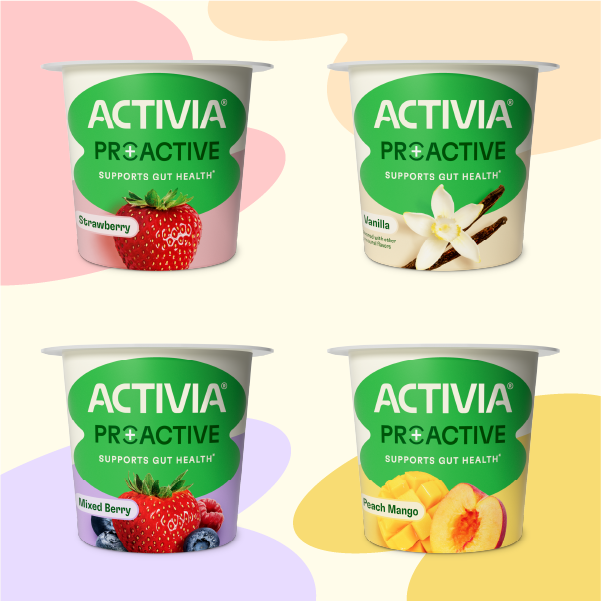
Gut health is not only central to Danone’s philosophy, but it’s one of its biggest growth avenues.
The company estimates the market for gut‑health products stands at around €120 billion and sees opportunities for biotics-driven solutions for muscle recovery, healthy ageing, brain health, and metabolic health.
Science-led research and innovation is a core differentiator, with Danone developing proprietary strains and investing in microbiome analytics and clinical research to support future product development streams.
It’s also ramping up marketing efforts, reformulating with cleaner and functional ingredients, and entering new formats to refresh its heritage brands, particularly Activia, as it seeks to appeal to health-conscious consumers of all ages.
Scale specialized nutrition

Danone sees adult medical nutrition as one of its key long-term opportunities. The company says the market is valued around €20bn and is expected to grow by around 50% in the coming years.
To that end, Danone is working to scale capacity by expanding and repurposing existing factories; make strategic acquisitions, expand beyond hospitals into home care and community pathways and increase its presence in the healthy ageing space.
Rebuild coffee creamer share

Danone is among the leaders in coffee creamers in North America, but a recall triggered at the end of 2024 has led to shelf share losses for its International Delight brand in 2025.
Incremental recovery was achieved in the third quarter but the leadership noted the process is slower because “it’s store by store [journey] to get it back”.
And it’s not just distribution woes: Danone is lagging behind competitors in releasing clean-label refrigerated creamers, meaning that a portfolio overhaul is on the cards.
Exploit functional and healthy hydration

Danone’s Waters division returned to growth in Q3 thanks to a successful summer season driven by Evian, Volvic and Mizone sales.
Functional and healthy hydration products were key growth drivers in the quarter. Volvic’s vitamin water was a bright spot that drove growth in Europe while in China, Mizone achieved high single-digit growth and its distribution will be expanded in 2026.
Danone sees the healthy hydration market as a growth segment, so there’s strong potential for new launches in this space in 2026.


