


Danone’s billion-euro deal for meal replacement brand Huel suggests that when it comes to fast-growing categories that complement its core, the French multinational is prepared to move decisively.
In a deal valued at €1.2 billion according to Dow Jones, Danone snapped up a rare asset: a proven, global, omnichannel nutrition brand with a strong financial performance and a healthy growth runway.
In that sense alone, adding Huel to its Essential Dairy and Plant-based portfolio is an obvious decision for the food and beverage major; but there are other critical dimensions at play.
For one, meal replacements have struggled to shed their unprocessed image despite being positioned as a convenient, complete nutrition solutions. Danone, with its evidence-based health and wellness approach to product development, is poised to transform the category into a true functional nutrition platform.
Here’s the logic behind the deal – and where Danone may take meal replacements next.
Why Danone is buying Huel – at a premium
According to its latest public accounts, Huel’s financial performance went from strength to strength in 2024.
The UK-based company reported a revenue of £214m (around €250m, up 16%); EBITDA of £18m (up 86%), profit before tax of £13.8m (up 194%), and a solid EBITDA margin of 8.5%.
Based on the reported €1bn acquisition price, this implies an enterprise value to revenue multiple of around four times for Huel – well above mature food and beverage peers – which suggests Danone sees the brand as a long-term strategic asset.
Several factors back the French multinational’s view here: from a complementary product portfolio to the market’s wider potential.
Achieving scale in meal replacements
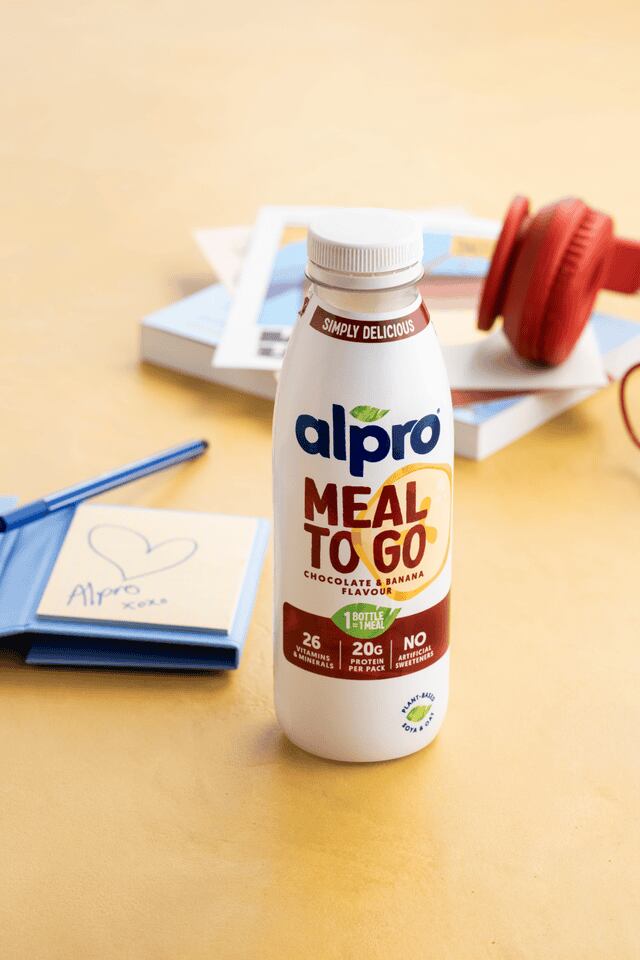
Danone entered the meal replacement category this year with Alpro Meal To Go, released in Europe. A plant-based drink positioned as a ‘nutritionally complete, ready-to-drink meal’, Danone had effectively formulated a Huel alternative, but arguably lacked Huel’s brand strength.
Scaling up Alpro Meal to Go into a true competitor to Huel would have required significant marketing and branding effort; making the idea of snapping up the meal replacement major all the more appealing.
Meal replacements’ growth runway
The meal replacement market is projected to grow at a 7.46% CAGR from 2026 to 2031, according to a recent Mordor Intelligence report. This is driven by several long-term trends, such as a shift towards convenience and health and wellness, and sustained interest in protein-rich formulations.
The broader picture corresponds with Huel’s market performance. According to a Dow Jones source, Huel’s FY2025 revenue climbed to £250 (up 16% year over year), suggesting growing demand for its products in a category it already dominates.
Huel is not just growing: it’s expanding

The UK-based meal replacement brand has reacted to increased demand by expanding its production footprint through a new factory in Milton Keynes near London, UK.
Built to be efficient in both logistical and environmental sense, the facility brought manufacturing in-house and thus reduced supply chain risk (Huel previously worked with contract manufacturers) and positioned the brand for long-term growth.
The factory can be scaled up depending on capacity needs and produces all of Huel’s dry ingredient blends for the UK and Europe.
From an acquirer’s perspective, a future-proof production facility is a significant asset in itself.
Revamping the meal replacement landscape
For Danone, buying Huel is not just a portfolio expansion move, but a potential step towards reshaping a high-growth segment.
Meal replacements are embraced by some consumers but winced at by others due to their image of ultra-processed products. This is where Danone’s evidence-based approach to product development could play a role in ‘cleaning up’ the category’s image.
Alpro Meal To Go likely offers a blueprint here: the product was formulated as a ‘smoother, lighter’ alternative to the sweet, thick shakes, and was dubbed ‘a real meal’ for consumers with busy lifestyles.
Why is Huel selling now?
Despite its strong financial performance, Huel is facing market headwinds, including increased competition from players including MyProtein, Athletic Greens, Jimmy Joy, Soylent, and Danone itself.
And the company’s latest accounts suggest Huel may have been preparing for a sale already: having hired several non-executive directors to oversee a governance overhaul, including Emma Woods, a former Wagamama CEO who navigated the restaurant group’s TRG acquisition and COVID period.
In 2024, Huel did not pay any dividends – opting instead to reinvest its cash – and could plausibly command a strong valuation of up to £1 billion based on revenue multiples commonly applied to fast‑growing nutrition brands.
For Huel, instead of risking losing shelf space to competition in the coming years, partnering with a multinational who could help maintain the brand’s dominance makes sense.
The move also ties well with Danone’s strategy and positioning within the functional nutrition space through science-backed solutions across gut health, protein, plant-based, and medical nutrition.
This is also at the heart of the group’s M&A strategy: in 2025, Danone acquired the Akkermansia Company, a biotic science specialist; and Kate Farms, a specialised medical nutrition company focused on plant-based solutions.
In short, the group is applying a benefit-led approach to its entire portfolio – moving away from formats to purpose-driven nutrition.
And Huel, pending the deal’s regulatory approval, is set to become the latest piece of that puzzle.


